Law Firm Business Development & Marketing
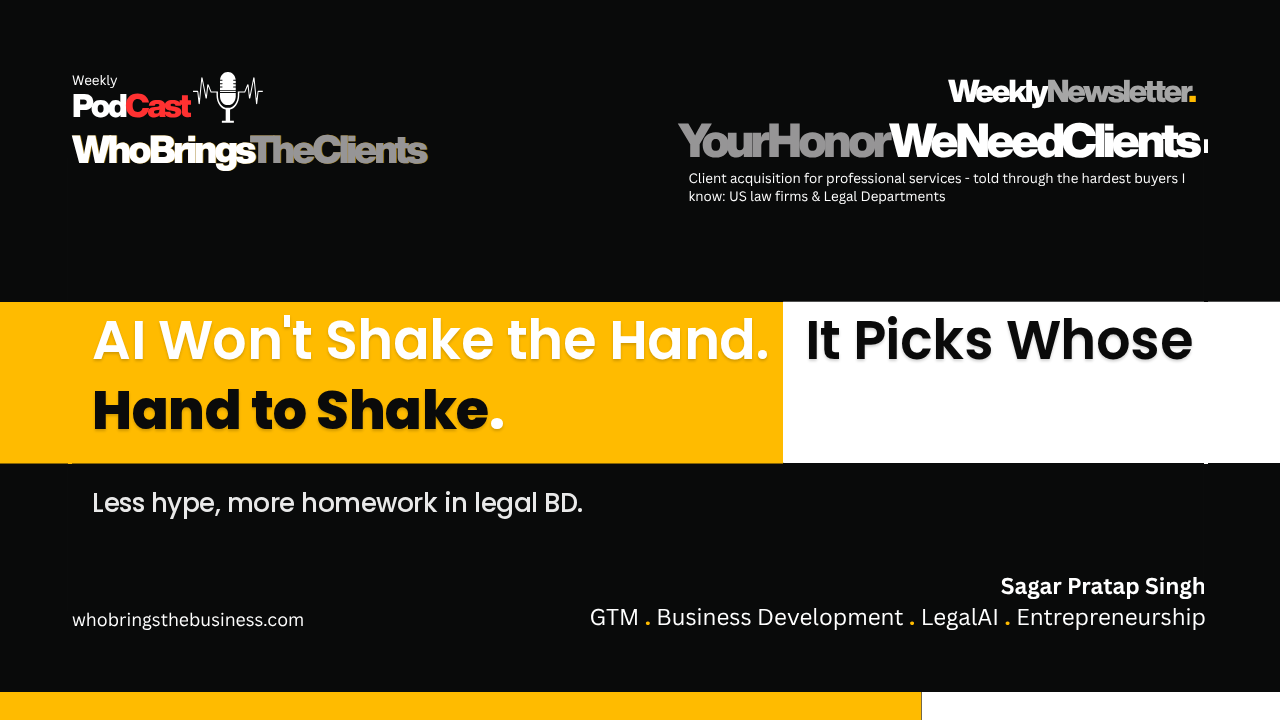
AI in Legal Business Development: Less Hype, More Homework
By Sagar Pratap SinghPublished Last updated
AI is common in legal practice but rare in law firm marketing. The ABA found 30.2% of firms used AI tools in 2024, and marketing adoption stayed sporadic. Relationships still close.
Full issue
AI has not replaced the handshake in legal business development, and it won't. What it changes is the work around the handshake: who you choose to meet, how fast you follow up, and whether a prospect can find you before they ever reach an event. Firms that use AI for that preparation, while keeping relationships human, will win more of the right clients.
One correction first. The popular claim that "82% of law firms use AI for lead generation" does not hold up. The ABA's 2023 TechReport found just 10.9% of respondents used any AI-based tool at all. By 2024 that rose to 30.2%, but the ABA described AI in law firm marketing as sporadic and cautious, still driven by relationships, reputation and ethics rules. Adoption in practice is real. Adoption in BD is early. That gap is the opportunity.
Before the room: targeting
Most BD time at conferences is wasted on the wrong conversations. AI earns its place in research, not in the room. Use it to build a short list of firms or GCs whose matters, case volume or hiring patterns match what you do, and to brief yourself on each before you arrive. I have done this for years selling into U.S. law firms. The ten conversations you planned beat the fifty you stumbled into.
After the room: follow-up
The follow-up is where most pipelines die. AI can draft a note that references the actual conversation, the prospect's recent filings or published work, within the hour instead of the week. The human part stays human: the specific insight, the introduction you offer, the judgement about when to call. Automated sequences that read like automated sequences do more harm than silence.
Between rooms: being found
This is the change most firms haven't priced in. Clio's 2025 Legal Trends Report found over half of consumers would turn to the internet to find their next lawyer, and more than half have used or would consider AI to answer their legal questions. Of those, 28% were told by the AI to contact a lawyer, and 12% were convinced their problem wasn't worth pursuing. Ask why a prospect never called, and more often now the answer is that an AI answered first and your firm wasn't in it. Your website, reviews and published expertise now feed the machines that pre-qualify your clients.
Guardrails that protect the brand
Clients are wary. In the same Clio research, nearly half of consumers said they aren't comfortable hiring a lawyer who uses AI to make decisions. So use AI for research and drafting, disclose where it matters, and keep advice and relationship calls with people. Bar advertising rules apply to AI-written content exactly as they do to human-written content, and data privacy obligations don't pause for a marketing tool.
The question is no longer whether to use AI in BD. It is whether you use it to prepare better or just to send more.
What to do this week
- Before your next event, use AI to research the attendee list and pick ten named targets with a reason to talk to each.
- Set a 24-hour follow-up rule, AI-drafted and human-edited, with one specific point from the conversation.
- Ask three AI assistants the question your ideal client would ask. Note whether your firm appears, and who does.
- Write a one-page AI use policy for marketing covering review, disclosure and bar advertising compliance.